
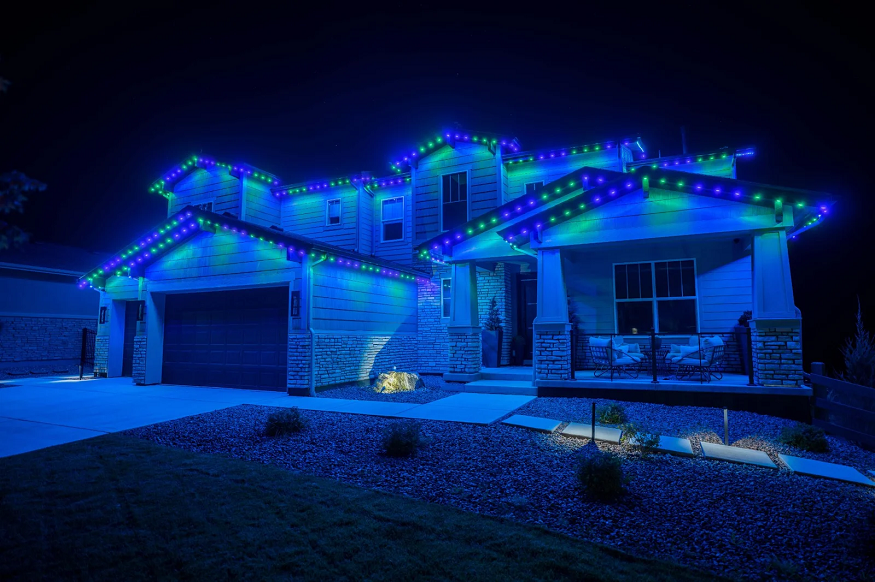
When real estate agents talk about curb appeal, they almost always mean daytime curb appeal. Fresh paint, trimmed hedges, a welcoming front door, clean windows. The assumption is that buyers and visitors form their first impression in broad daylight, which is mostly true — but only mostly. A surprising number of showings, evening drive-bys, and “let me show my spouse this house tonight” moments happen after sunset, when most homes go dark and disappear into their landscaping. Whatever curb appeal you spent the weekend building vanishes the moment the porch light becomes the only thing working.
That gap is exactly what permanent outdoor lighting has started to close. Companies like First Response Lights install discreet LED tracks under the eaves and soffits of a home, creating a soft warm-white wash along the rooflines that essentially extends curb appeal into the evening hours. During the day the system disappears into the trim. After dark, the architecture comes alive — and as a bonus, the same system can switch into holiday colors a few times a year. It’s quietly become one of the most-requested exterior upgrades on the market, and it’s worth understanding why before your next renovation budget gets locked in.
Why curb appeal at night actually matters
For decades, the conventional wisdom was that nighttime curb appeal was a luxury problem — something to worry about after the lawn was perfect and the shutters were freshly painted. That thinking is starting to look outdated.
A few realities have shifted. People work later than they used to, which means more drives home after dark. Online listings now lead with photography that increasingly includes twilight shots, because realtors know those are the images that stop buyers mid-scroll. Evening showings and open houses are more common than they were ten years ago. And in northern climates, “after dark” can mean anywhere from 4:30 p.m. onward for half the year — meaning your home spends more of its visible life in darkness than in daylight from October through March.
A home that looks polished at noon but disappears at 5 p.m. is leaving a lot of curb appeal on the table.
Read More: When the Water Stops Flowing: A Practical Guide to Well Pump Repair and System Health
What permanent lighting actually accomplishes
The simplest way to describe a well-installed permanent lighting system is that it does for your home’s exterior what recessed lighting does for an interior room: it makes everything look intentional.
The warm white architectural mode — which is how most homeowners use the system day-to-day — traces the rooflines, gables, and dormers in a soft glow. The eye follows the silhouette of the house instead of the dark void where it used to be. Front entries feel welcoming. Stone, brick, and siding gain texture they didn’t have before. The yard around the home reads as cared-for instead of empty.
It’s the same effect you’ve probably noticed driving through high-end neighborhoods at night without being able to put your finger on why those homes looked more expensive. They weren’t necessarily larger or newer. They were lit.
The seasonal layer is just a bonus
Almost every conversation about permanent lighting starts with Christmas, but that’s not where the real value lives. The holiday color modes are a fun bonus a few weeks of the year — red and green in December, orange and purple in October, pastels for spring, red, white and blue for the Fourth of July — but most homeowners settle into running warm white the other 320 nights and treating the color presets as occasional accents.
Used that way, the system stops feeling like a holiday gimmick and starts feeling like a permanent design element that just happens to have a fun mode.
What to look for before you commit
If you’re considering permanent lighting as a curb appeal upgrade, a few things will determine whether you love the result or regret it.
The track must be hidden under the drip edge. A sloppy install that surface-mounts the channel onto the fascia ruins the look during daytime — instead of the system disappearing, you’ve added a strip of hardware to your home’s exterior that you’ll see every time you pull into the driveway. Always ask installers to show you daylight photos of completed homes, not just glamour shots taken at night.
Brand differences are real. The market has consolidated around a handful of established players, with names like Jellyfish Lighting, Trimlight, and Govee being the ones most homeowners encounter while researching. They differ in LED density, color quality, channel profile, app reliability, and warranty length. None is universally best, but the differences matter enough to compare in person.
Color temperature should match your existing fixtures. If you already have warm-toned coach lamps and a warm porch light, you don’t want a permanent system in cool white fighting them. A good installer will ask about your existing exterior fixtures and recommend a temperature that ties everything together.
Get it done before other exterior projects, or after — never during. If you’re planning to repaint, replace gutters, or redo the fascia in the next year, time the lighting install around those projects rather than through them.
Read More: Elevating Architecture: The Comprehensive Guide to Wall Panel Siding for Modern Structures
Does it actually add resale value?
This is the question every homeowner eventually asks, and the honest answer is: probably, but it depends on the buyer and the market. Permanent lighting isn’t on most appraisers’ line-item lists the way a finished basement or a new roof is. What it does do is improve how the home shows — particularly in listing photography and during evening drive-bys, both of which materially affect how quickly a home sells and how seriously buyers engage with it.
In a market where two similar homes are competing for the same buyer, the one that looks finished after dark has an edge that’s hard to put a number on but easy to feel.
The bottom line
Curb appeal used to end at sunset. It doesn’t have to anymore. Permanent outdoor lighting is one of the few exterior upgrades that improves how your home looks every single night, year-round, without requiring any ongoing effort from you. Treated as a curb appeal investment rather than a holiday accessory, it’s quietly becoming one of the smarter exterior moves a homeowner can make.