Renovating or excavating a property is never as simple as it looks on paper. Beneath every driveway, slab, or garden bed lies a complex network of pipes, cables, voids, and structural elements that are often undocumented or outdated. Striking the wrong utility during construction can lead to costly delays, safety hazards, and even legal issues.
This is where ground penetrating radar (GPR) is transforming the way modern renovation projects are planned and executed. By allowing contractors and engineers to “see” beneath the surface without digging, GPR technology is quickly becoming a standard tool for safer, more efficient, and risk-free renovations.
What is Ground Penetrating Radar?
Ground penetrating radar is a non-invasive geophysical method that uses high-frequency radio waves to scan below the surface. When these waves encounter different materials—such as soil, concrete, pipes, or voids—they bounce back to a receiver, creating a detailed image of what lies beneath.
Read More: Save Big When You Buy VintageView Wine Racks Online
Unlike traditional excavation or older detection methods, GPR does not disturb the ground. Instead, it provides a real-time visual map of subsurface structures, helping professionals identify potential hazards before any physical work begins.
This makes it an invaluable tool for renovation, construction, and infrastructure projects.
Why Renovations Carry Hidden Risks
Many homeowners and even experienced builders underestimate what’s beneath a property. Over time, multiple layers of development can result in outdated or incomplete records of underground infrastructure.
Common hidden risks include:
- Electrical cables and conduits
- Gas and water pipelines
- Sewer and drainage systems
- Reinforced concrete footings or slabs
- Voids or unstable ground conditions
Hitting any of these during excavation can lead to serious consequences, including service outages, expensive repairs, and safety risks for workers and occupants.
In urban environments especially, the underground landscape is often far more congested than expected.
How Ground Penetrating Radar Works on Site
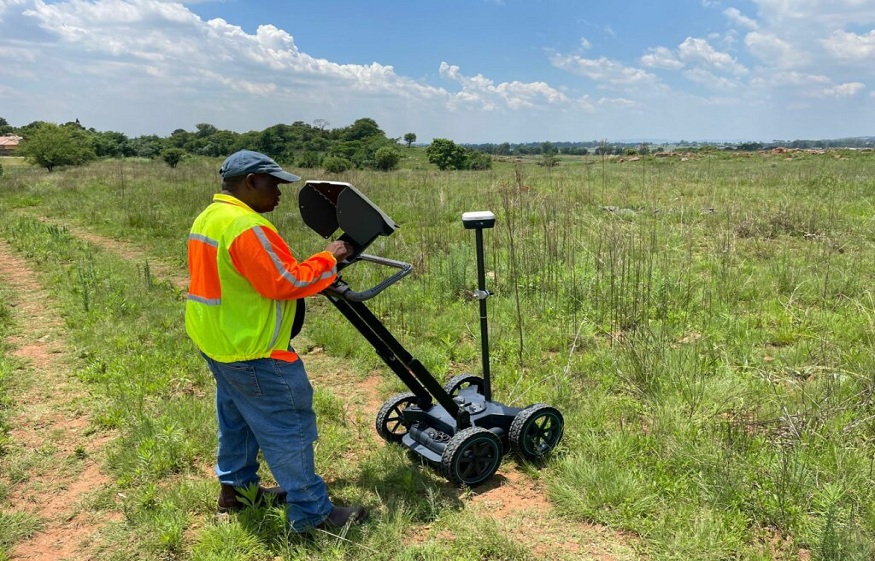
The process of using GPR is relatively straightforward, but highly technical in its execution. A GPR device is moved across the surface of the area being scanned, whether that’s soil, asphalt, or concrete.
As the radar waves penetrate the ground, they reflect back signals based on changes in material density. These signals are then processed into visual data, often displayed as:
- Cross-sectional images
- 2D or 3D subsurface maps
- Marked utility locations
Skilled operators interpret these results to identify anomalies and map out underground features with precision.
This allows contractors to plan excavation work with a clear understanding of what lies beneath the surface.
Key Benefits of Using GPR in Renovations
1. Reduced Risk of Utility Strikes
One of the most significant advantages of GPR is its ability to locate buried utilities before digging begins. This dramatically reduces the risk of damaging essential services like water, gas, or electricity lines.
Avoiding these incidents not only protects workers but also prevents costly service interruptions and repair bills.
2. Non-Destructive Investigation
Unlike trial pits or exploratory digging, GPR is completely non-invasive. This means surfaces such as concrete slabs, paved areas, or landscaped gardens remain intact during the assessment process.
For homeowners, this is particularly valuable during renovations where preserving existing structures is important.
3. Improved Project Planning
Having a clear underground map allows engineers and builders to plan with confidence. It helps determine:
- Safe excavation zones
- Optimal placement for new utilities
- Structural limitations of the site
This level of insight reduces guesswork and improves overall project efficiency.
4. Cost Savings and Fewer Delays
Unexpected underground obstacles are one of the most common causes of construction delays. By identifying these issues early, GPR helps avoid:
- Rework and redesign costs
- Equipment damage
- Project downtime
In many cases, the upfront cost of scanning is significantly lower than the potential cost of a single utility strike.
5. Enhanced Safety on Site
Construction sites inherently carry risks, but unknown underground hazards increase that risk significantly. GPR helps create a safer working environment by providing visibility into what would otherwise be invisible dangers.
This is especially important in high-density urban areas where multiple utility networks overlap.
Common Applications of Ground Penetrating Radar
GPR is used across a wide range of renovation and construction scenarios, including:
Residential Renovations
Homeowners planning extensions, pools, driveways, or landscaping projects benefit from GPR scanning before excavation begins.
Commercial Developments
Large-scale building projects rely on accurate subsurface data to coordinate complex infrastructure layouts.
Road and Civil Works
GPR is widely used to assess road foundations, locate utilities, and detect structural weaknesses beneath pavements.
Heritage and Sensitive Sites
Because it is non-invasive, GPR is ideal for investigating areas where preservation is critical and excavation is restricted.
Limitations of GPR Technology
While ground penetrating radar is highly effective, it is not without limitations. Its accuracy can be influenced by factors such as:
- Soil composition (clay-heavy soils can reduce signal clarity)
- Moisture levels in the ground
- Depth of target objects
- Size and material of buried objects
For this reason, GPR is often used in combination with other detection methods, such as electromagnetic locating, to provide a more complete subsurface picture.
Professional interpretation is also essential, as reading GPR data requires experience and technical expertise.
Why GPR is Becoming Industry Standard
As construction standards evolve, there is increasing emphasis on safety, efficiency, and risk reduction. GPR fits perfectly into this shift by offering a reliable way to assess subsurface conditions before work begins.
Many councils, engineering firms, and construction companies now require or strongly recommend GPR scanning as part of pre-construction planning.
The benefits are clear:
- Fewer accidents
- Lower project risk
- Better compliance with safety standards
- More predictable project outcomes
As the technology becomes more accessible, its use is expected to continue growing across both residential and commercial sectors.
The Future of Risk-Free Renovations
The construction industry is steadily moving toward smarter, data-driven decision-making. Ground penetrating radar is a key part of that evolution, helping transform renovation projects from uncertain and reactive to informed and controlled.
In the future, we can expect GPR to become even more advanced, with improved imaging resolution, faster processing, and integration with digital modelling tools such as BIM (Building Information Modelling). This will allow for even more accurate planning and simulation before any physical work begins.
Final Thoughts
Renovation projects will always involve some level of complexity, but hidden underground risks no longer need to be one of them. Ground penetrating radar provides a safe, efficient, and highly effective way to understand what lies beneath the surface before digging begins.
Read More: When the Water Stops Flowing: A Practical Guide to Well Pump Repair and System Health
By reducing uncertainty, improving planning accuracy, and enhancing site safety, GPR is redefining how modern renovations are approached. For homeowners, builders, and developers alike, it represents a smarter way to build with confidence—and a clear step toward truly risk-free renovations.